With the beginning of Russia’s full-scale invasion of Ukraine, the number of IDPs in Kropyvnytskyi has soared to 26,000, and the oblast has seen an influx of over 80,000 IDPs during this time. There are those who linger, those who return to their homes at the first chance, and those with nowhere else to go. Hence, as in other oblasts, securing accommodation is a critical challenge for IDPs. In the following interview, Anton Antonov, regional coordinator of the United Voices in Action* program in the Kirovohradska Oblast, shares insights on how this issue is being tackled and the role of the IDP Council.
How do you evaluate the housing circumstances for IDPs in Kropyvnytskyi and the oblast as a whole?
– In actuality, the Kirovohradska Oblast can comfortably accommodate around 5,000 IDPs. Nevertheless, the oblast provided refuge to tens of thousands. It is hardly surprising, then, that housing emerges as a burning issue for these individuals, with rental being particularly taxing. Regrettably, instances of inflated rental fees are commonplace, and IDPs are often unable to afford such exorbitant charges. This is arguably their primary concern.
From your perspective, what kind of support do IDPs need in resolving their housing dilemma?
– The issue warrants earnest attention, and we need to kickstart the development of practical solutions. As far back as 2018-2019, the city council contemplated the allocation of land for construction, given that IDPs have been part of our community since 2014. Disappointingly, the construction concept never progressed past the deliberation phase. Presently, this concern has intensified. The IDP Council that we envisage setting up in Kropyvnytskyi will assist IDPs in addressing these complications in a holistic manner. For instance, they will be incorporated into discussions at the city council level and will have a say in the decision-making process. A close collaboration between the authorities and IDPs will be crucial to safeguard their rights and facilitate their integration into the community.
Could you elaborate on the IDP Council? What is its nature? What motivated its inception, and what issues will it tackle?
– At present, the Department of Social Policy bears the responsibility for IDPs in the oblast. However, we recognize that apart from IDPs, the Department also caters to other segments of the population. Meanwhile, the tens of thousands of IDPs in the oblast are grappling with pressing day-to-day issues that need immediate attention. Unfortunately, no entity currently exists that focuses solely on IDPs’ concerns. Thus, the United Voices in Action program provides us with a platform to establish a unique advisory body in our city, specifically catering to IDPs in an all-encompassing manner. We envisage this as a communication platform where IDPs and local government representatives can interact, not only to discuss but also to resolve issues. The IDP Council will tailor its tasks according to the issues brought to its attention by IDPs. Additionally, it will be able to offer recommendations to the city council, devise specific programs, or draft decisions on current issues.
What is your vision for the IDP Council’s composition in Kropyvnytskyi?
– We anticipate it to be relatively large, encompassing at least 50 members. The Council will be made up of IDPs and representatives from specialized civic organizations. We have already convened an initiative group of ten individuals who are certain to join the Council. Some of them have even undergone training as part of the United Voices in Action program.
What other support does the United Voices in Action program offer to IDPs?
– The United Voices in Action program provides IDPs with free consultations from our lawyer. He assists with registration, recovery of lost documentation, payment registration, and writing applications and appeals to the authorities. In order to access legal aid through our program, one needs to complete a questionnaire detailing contact information and the crux of the appeal. A follow-up will then be arranged.
Our professionals frequently visit IDPs’ Collective Centers to provide consultations. Presently, 12 such sites exist in Kropyvnytskyi, and plans are underway to establish another.
Moreover, as part of the United Voices in Action program, we conduct assorted trainings for IDPs on a roughly biweekly basis. Topics range from explaining restrictions on international travel during martial law to advising on the course of action if one’s documents are lost. Currently, we’re organizing a training session on the Istanbul Convention.
What are the most common questions IDPs ask your lawyer?
– The majority of appeals revolve around destroyed housing or accommodation at places of temporary registration. Numerous issues pertain to inheritance, which can be challenging to formalize or secure. The greatest hurdle arises in assisting individuals whose property is under occupation. We’re limited to registering applications at the nearest police stations or other institutions within areas under Ukrainian control. This establishes the basis for further action. Our lawyer considers each issue individually, striving to deliver the maximum possible aid.
Which informational resources would you recommend to IDPs for comprehensive and relevant information on various topics?
– The United Voices in Action program has devised a handbook spanning 12 sections, addressing all frequently posed questions by IDPs. This includes finding accommodation, IDP registration, education, employment, and humanitarian and social aid. These methodological resources are routinely updated in line with legislative or other document changes regulating these matters. Our handbook is available in print and digitally. Copies have been distributed to the city council’s social departments and the oblast state administration, all of which noted that the information is very detailed and the handbook is actively used by specialists and shared with others. We have also placed our handbooks in dormitories on dedicated information stands. They are helpful not just for IDPs but also those working with them.
Currently, the integration of IDPs is widely discussed. Does the United Voices in Action program have initiatives in this regard?
– Presently, we’re focusing on community integration, especially targeting IDP children. We engage them in a variety of activities. Regrettably, not all communities or NGOs dedicate sufficient attention to integration. There are various trainings or webinars on assorted topics, Ukrainian language courses, etc., but we are now in the process of creating comprehensive solutions — outlining how, when, and with whom to work to integrate IDP children into their new surroundings.
A regional forum on IDP integration was recently conducted in Kropyvnytskyi. What outcomes did it yield?
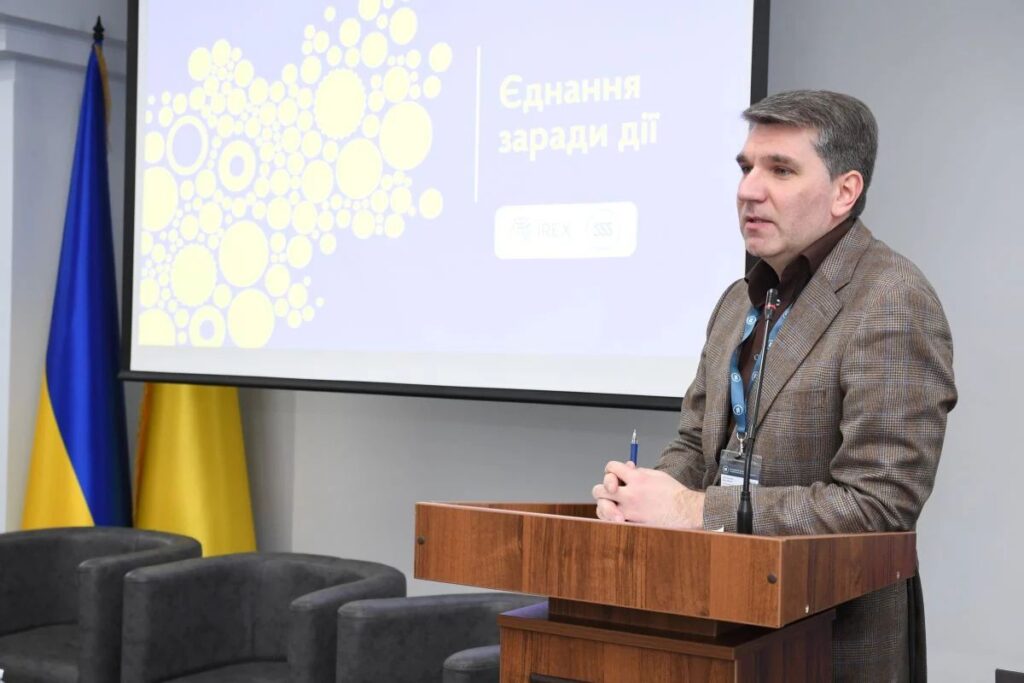
– The forum’s main objective was to expedite the establishment of an IDP Council in the Kropyvnytskyi territorial community. Consequently, attendees signed a resolution in favor of this initiative. It was a landmark event, marking the first time Kropyvnytskyi has witnessed such extensive participation, with IDPs, local government representatives, and numerous NGOs in attendance.
The forum served as a platform to discuss relevant issues associated with IDP integration into the community, future plans and to exchange experiences, for instance, in social entrepreneurship and business relocation. Some participants discovered activities of humanitarian headquarters or children’s clubs. Thus, this inaugural meeting was informative and beneficial for all attendees. Among our forthcoming steps is the launch of an IDP Council in the Kropyvnytskyi territorial community to advocate for IDPs’ rights and interests.You can receive free legal assistance and find useful information for IDPs on the United Voices in Action program website.