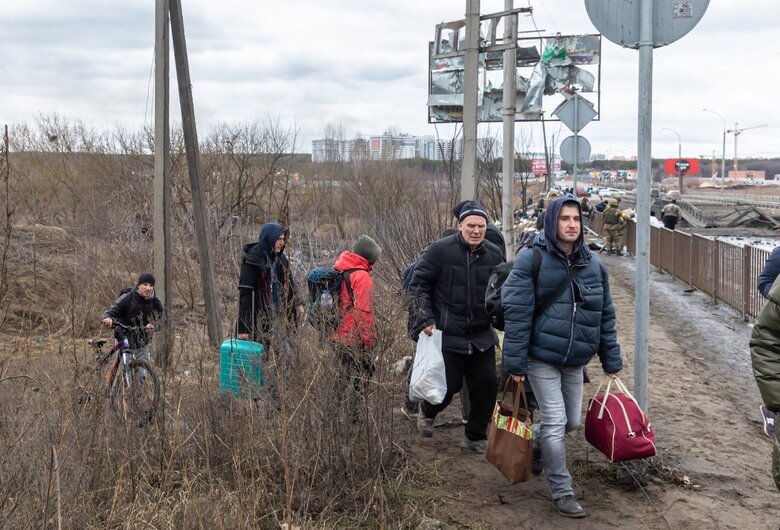
In April, the government adopted the Strategy of State Policy on Internal Displacement for the Period until 2025.
What does it stipulate, and how can it improve the lives of internally displaced persons? Answering frequently asked questions.
What will be implemented for IDPs under the Strategy adopted by the government? How does it differ from those implemented earlier?
While the previous strategies were oriented toward integrating internally displaced persons (IDPs) and described different areas of integration processes (e.g., educational or medical), this strategy focuses on all internal displacement issues. These include evacuation, organizational support for communities, adaptation, integration of internally displaced persons, and facilitating their safe return to the places of residence they had abandoned.
In summary, this Strategy outlines a comprehensive framework for the government to address the needs of internally displaced persons effectively. Each strategic priority is described by tasks in the operational plan and contains specific actions and timeframes for implementation.
For example, if there is a task to harmonize national legislation on internal displacement, one of the specific tasks is to develop amendments to the Law on Internal Displacement. If, for example, there are issues related to payments, then the relevant action is to amend the resolution to address the specific payment issue. And so on for each activity.
What is the role of the United Voices in Action program in implementing this strategy?
Similar to other civil society organizations, we were engaged by the Ministry of Reintegration in the development of this Strategy. We appreciate the ministry’s approach involving the public sector in conversations and suggestions during the development phase. Specifically, our program organized targeted meetings with representatives of IDP Councils in order to gather these recommendations. The representatives had the opportunity to acquaint themselves with the strategy’s vision and express their recommendations and input.
Then we summarized it and submitted it to the Ministry of Reintegration. In this way, IDPs from IDP councils were involved in developing this strategy, and we heard feedback on the needs and specific measures that IDPs would like to see in the Strategy. Thus, we facilitated additional communication opportunities for IDPs and offered expert support as legal professionals assisted with processing these documents. Ultimately, we presented a consolidated document to the ministry.
Why is it essential to integrate IDPs into new communities?
The specific feature of IDPs’ integration is that they are citizens of our country. We do not bring foreigners to Ukraine who may or may not decide whether they want to live here. Ukrainian citizens move within their country and must have the opportunity to live, work, and be part of their new communities. For an individual to successfully integrate into the socio-economic environment, secure employment, and maintain an adequate standard of living, the process of social adaptation and integration must be effective. This ensures that the person can obtain a job, have a say in the community, and gain the ability to influence decisions. And pay taxes.
What role do IDP Councils play in this process?
IDP Councils are more about advocating for the rights and policies that internally displaced persons need. It is about the community making decisions for the interests of IDPs and their benefit. Therefore, it is essential that IDP Councils strengthen the voice of IDPs. Otherwise, unfortunately, they will be forgotten. Communities may make decisions based on their vision rather than a needs assessment. This is not the right approach.
What is the United Voices in Action program doing to increase the number of IDP Councils?
As part of the United Voices in Action program, we advocate for the creation of new IDP Councils and support for existing ones. These include integration activities for children, and working meetings of experts to develop local programs and solutions. I have been working on the topic of IDP Councils since 2019. Our work with IREX, particularly with the United Voices in Action program, continues my previous activities.
IDP Councils are primarily about access to community decision-making. The IDP Council does not create specific services for IDPs; it is not about providing direct services, but about improving interaction with the community, with local authorities, and access to governance decisions. We believe that this is very important. That is why the program focuses on communities where we not only create IDP Councils but also help these councils gain experience and become sustainable.
How many IDP Councils have been established in Ukraine, and in which regions?
There are already 16 IDP Councils at the oblast and city levels in Ukraine. These are regional councils in Luhanska and Ternopilska oblasts, and city councils in Kramatorsk, Svitlodarsk (temporarily occupied territory), Maryinka (temporarily occupied territory), Uzhhorod, Kamianets-Podilskyi, Poltava, Kharkiv, Zaporizhzhia, Kamianske, Kryvyi Rih, Cherkasy, Chernivtsi, and Kyiv (in Obolonskyi and Darnytskyi districts).
*United Voices in Action is a two-year program that aims to bring together IDPs, host community members, government officials, and media representatives to resolve conflicts at the local level, integrate IDPs, and create an inclusive, democratic, and cohesive society.
Source: “biz.censor.net“