Olga Ivanova
Program Director at Charity Foundation Stabilization Support Services
The war, which has been going on for nine years, has become a test of humanity and empathy, the flexibility of the government system, and its ability to help citizens in the most difficult times. Moreover, it is a test of the readiness of Ukrainian society to integrate into Europe and ensure equality of rights and opportunities in practice.
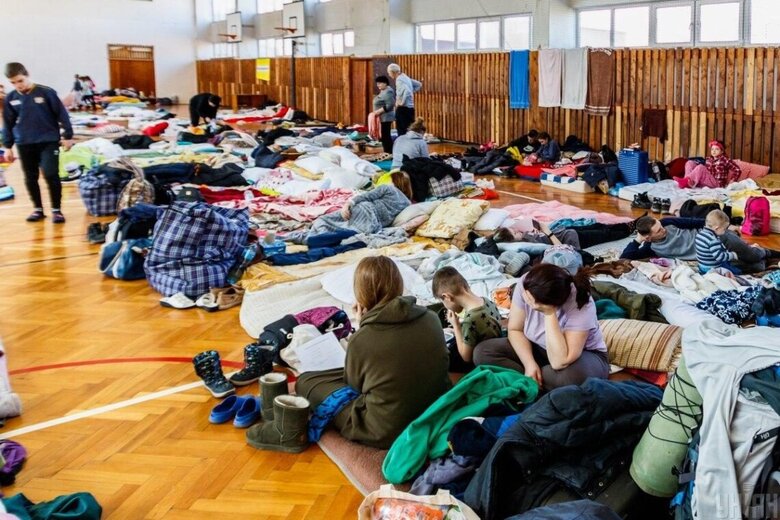
As of the end of January 2023, approximately 5 million internally displaced persons (IDPs) were registered. These data are provided by the Ministry of Reintegration of the Temporarily Occupied Territories. The actual number of IDPs may be much higher, as many do not register.
On systemic solutions for integrating IDPs into communities
To begin with, Ukraine is not the only country that has faced massive displacement of citizens due to war. There is a section of international law that describes the mechanisms of assistance to IDPs. Generally speaking, there are three types:
- The war ends, we recover the territories occupied by the aggressor, and people return to their hometowns and villages to resume their normal lives;
- IDPs stay where they currently reside because they do not want or cannot return home. They rebuild their lives in a new community;
- IDPs move to another country or a new place of residence and start building a life in a new environment.
All of these options entail different support programs. Some people need nothing, others need more because they belong to a certain vulnerable category. An important task has arisen now, which is to propose mechanisms that could help IDPs (regardless of category) feel comfortable and exercise their rights.
It is also important to involve internally displaced persons in making these decisions. They can speak on the needs and difficulties they face in the community. Their direct involvement is crucial. The United Voices in Action program is helping to create these systemic, long-term solutions, in particular through IDP Councils.
The work of the United Voices in Action team
We are currently working in 25 communities in 15 oblasts. Our coordinators advise on where to apply for humanitarian aid and which local authorities and services can support you in a difficult situation. The project’s lawyers explain the nuances of Ukrainian legislation: what needs to be done to receive benefits or how to get out of a difficult situation. Over the year, 4,107 IDPs received free legal advice. Most often, we dealt with the issue of IDPs’ living allowances, pensions, unemployment benefits, and other social benefits. We also provided advice on obtaining temporary housing, paying for utility services, and helped to restore documents.
In addition, we produce a lot of informational content that we post on our social media and the website of the project. We also cover all the important changes in Ukrainian legislation that may affect the lives of IDPs.
Moreover, we are building a network of IDP Councils under local authorities to ensure that people who have experienced forced displacement can participate in decision-making, cooperate with the authorities, and determine what they need for a comfortable life in a new community.
IDP Councils are not just advisory and representative bodies. It is a tool for dialogue and interaction with the authorities for those who want to influence the life of the community. We understand that no one knows their needs and concerns better than the IDPs. IDPs are also able to share their knowledge and experience and offer successful projects. However, not all members of the Council have to be IDPs; lawyers, volunteers, civil servants, representatives of NGOs, and experts often join the Council. This diversity of experience and expertise makes these Councils a valuable asset for communities.
On the issues addressed by the IDP Councils within the framework of the United Voices in Action project
IDP Councils take into account the unique characteristics of each region. Still, most of the appeals are about housing. There are cases when IDPs received housing thanks to the work of the Councils.
Other common requests include employment. We strive to ensure that highly qualified professionals get jobs that match their skills.
The IDP Councils also focus on programs for children. They may contain detailed information on benefits for children affected by the war. We also organize trainings and workshops with lawyers and events for children and women.
Prioritizing the solution of urgent problems over training and other activities
Many organizations prioritize meeting humanitarian needs. That used to be our focus as well. But the experience of 2014-2015 proved that this resource is limited. At that time, humanitarian aid from international partners and local organizations simply ran out at some point.
IDPs are a powerful community capable of solving their own problems and managing their own lives. In cooperation with the authorities, it is the one that can meet current needs and develop a strategy for the future.
It is noteworthy that about 1.7 million citizens had no opportunity to elect their representatives in local elections in 2014-2020. In 2021, they regained full voting rights. But now, during martial law, there are no elections, and it is, therefore, crucial to offer IDPs alternative mechanisms for democratic participation in community life and to offer the community effective platforms for citizen dialogue.
On the project’s future plans
We have started the second year of the project, and we continue to create IDP Councils and, at the same time, communicate with the existing ones. We held a series of regional IDP Forums and developed many useful solutions for regions and communities, uniting both IDPs and other concerned citizens.
In April 2023, the format of IDP Councils became part of the Ukrainian Strategy on Internal Displacement, meaning that there will be a growing interest in their creation, and we are preparing to share our experience with all stakeholders.
We are also planning a series of dialog initiatives because we understand the importance of informal conversations about needs, opportunities, and problems. We hope that a series of these meetings in all of our oblasts will improve communication between IDPs and people from host communities.
*United Voices in Action is a two-year program that aims to bring together IDPs, host community members, government officials, and media representatives to resolve conflicts at the local level, integrate IDPs, and create an inclusive, democratic, and cohesive society.
Source: “biz.censor.net“