
On November 14, a Declaration of Intent entitled “Sustainable and Quality Reconstruction: Involving Councils on Internally Displaced Persons in the Reconstruction Process” was presented in Kyiv. This is the first document to record a public commitment to involving displaced persons and affected communities in decision-making regarding post-war recovery. The initiative was announced by the Charity Foundation “Stabilization Support Services” during the III All-Ukrainian Forum of IDP Councils, which brought together more than 350 participants and was organized with the support of UNHCR, the UN Refugee Agency in Ukraine, and the International Research & Exchanges Board (IREX), in partnership with the Ministry of Development of Communities and Territories of Ukraine.
The Declaration of Intent is a public commitment to engage in inclusive and equitable recovery. The document brings together state institutions, organizations, businesses, academia, and IDPs themselves. It sets out common goals and provides for practical steps ranging from regular consultations with IDP Councils to taking their recommendations into account in the recovery process.
The Third All-Ukrainian Forum of IDP Councils became a key platform for presenting the Declaration and discussing how to ensure the influence of IDPs on the recovery and development of communities. The forum brought together representatives of the Office of the President of Ukraine, the government, the Verkhovna Rada, local authorities, international organizations, donor structures, and representatives of IDP Councils working in communities across the country.
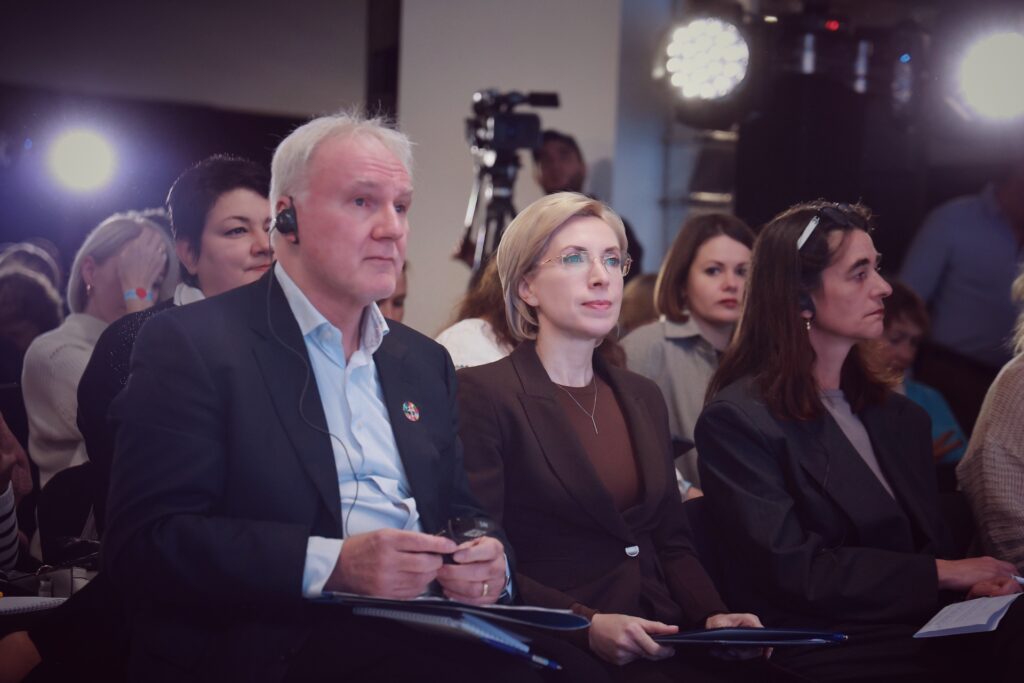
“Today, IDP Councils bring together more than 13,000 people, which is a large and needed strength. When the enemy wages war against civilians, millions of displaced persons suffer the most: the elderly, people with disabilities, single mothers and mothers with many children, and residents of frontline territories. The government, the civil society sector, and our partners are providing assistance, but caring also means listening to people and advocating for their interests. That is why the role of IDP Councils is extremely important today: they provide systematic advocacy, integration into new communities, work with donors, and make people feel that they have not been abandoned to face their problems alone,” said Iryna Vereshchuk, Deputy Head of the Office of the President of Ukraine, opening the forum.
From Representation to Impact
There are currently over 800 IDP Councils operating in Ukraine. These are consultative and advisory bodies, which must include IDPs themselves. They help local authorities understand the needs of people who have been forced to leave their homes, and facilitate their integration into communities.
The first two All-Ukrainian Forums of IDP Councils laid the foundation for the development of a network of Councils throughout Ukraine. In 2023, the focus was on the official recognition of the Councils and a shared vision of their role. In 2024, the focus shifted to creating a coordination mechanism and strengthening their capacity. The third forum continued along this path, focusing on how the Councils can have a real impact on recovery, development, and local policymaking.
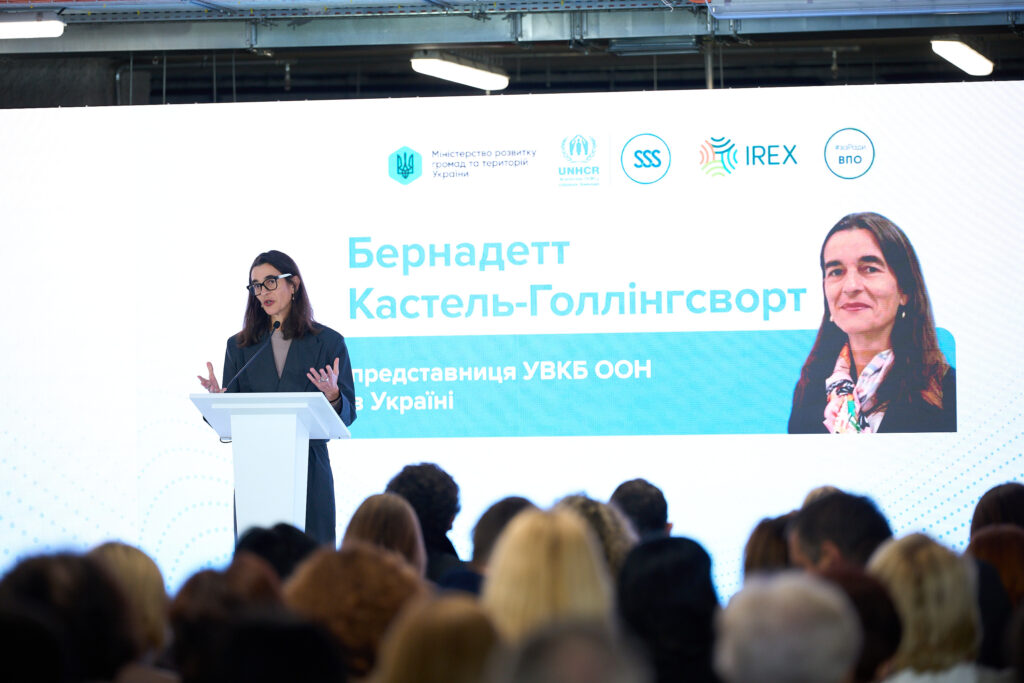
“IDP Councils have become a powerful example of how displaced people can shape the future of their communities and inform national policies. Their lived experience, leadership, and personal understanding of people’s needs provide an essential foundation for effective and inclusive local solutions. For UNHCR, supporting these councils is a strategic commitment to strengthening Ukraine’s resilience and ensuring that the voices of displaced people continue to guide the country’s recovery,” said Bernadette Castel-Hollingsworth, UNHCR Representative in Ukraine.
The war in Ukraine has not only caused one of the largest displacements in Europe in decades, but has also demonstrated a unique example of how the government, communities, and displaced persons themselves can work together to build effective mechanisms for participation and protection.
“In Ukraine, millions have been internally displaced by war, many of them multiple times. Yet, in the face of such adversity, Ukraine has demonstrated leadership and resilience. The creation and expansion of IDP Councils across the country has been remarkable, ensuring that displaced persons have a voice in shaping the decisions that affect their lives.
Through these Councils, Ukraine has demonstrated how inclusive governance can help rebuild trust, restore dignity, viewing IDPs as active citizens and residents with a crucial role to play in peace and recovery, even amidst ongoing war. I have seen other countries be inspired by Ukraine’s experience with IDP Councils,” emphasized Paula Gaviria Betancur, Special Rapporteur on the Human Rights of Internally Displaced Persons.
Key Topics of the Forum
The forum program was built around three strategic areas: impact, sustainable development, and partnership. Over the two days of the event, participants discussed the challenges of integrating displaced persons into communities, the effectiveness of government policy in the field of IDPs, and tools that help the Councils turn participation into real change.
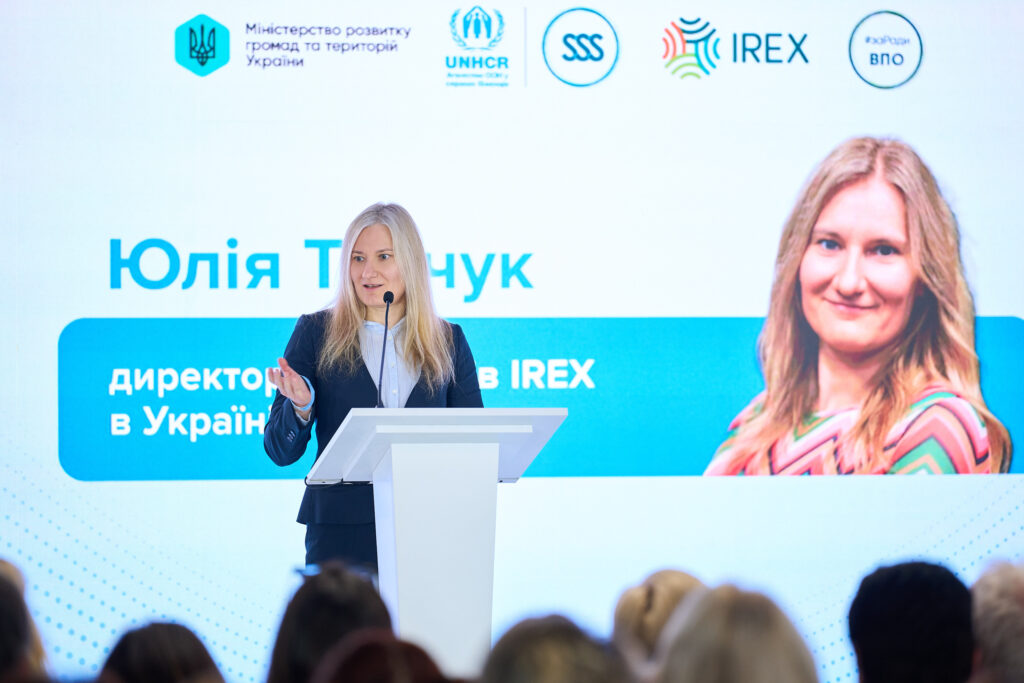
Yuliia Tkachuk, project director at IREX in Ukraine, emphasized that today, the Councils work not only for displaced persons, but also change the lives of entire communities, becoming partners of the government and international organizations.
“The activists who created the first IDP Councils have become a strong professional network that influences entire communities and contributes to the transformation of public policy. This mechanism did not emerge overnight. It emerged thanks to the support of partners and the courage of people who were not just forcibly relocated but also started to improve their new communities. The IDP Council is a living organism. Some of them work effectively, some are in the process of decomposing, and some are undergoing transformation. We will continue to support the IDP Councils by organizing training, exchanging experiences, and providing opportunities to share useful solutions that they develop in the course of their practical work,” said Yuliia Tkachuk.
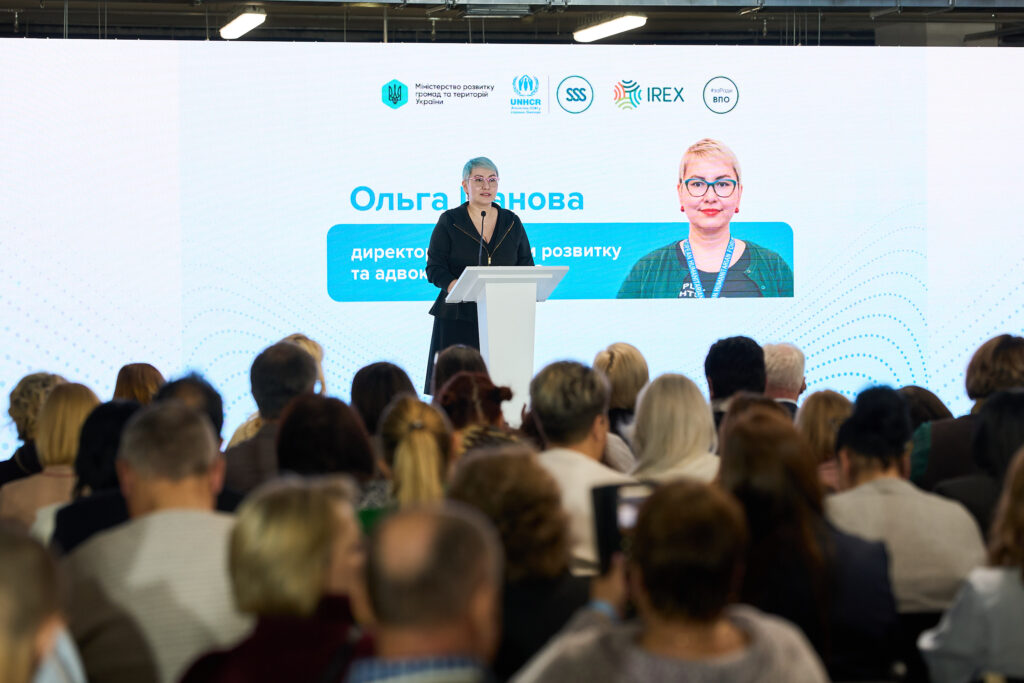
The key results of the development of the network of IDP Councils over the past year were presented during the forum. Olha Ivanova, Director of Development and Advocacy Programs at the CF “Stabilization Support Services”, said that this year alone, the CF SSS team held four interregional forums, over a hundred strategic sessions, webinars, and seminars, more than 70 training sessions, and provided nearly 800 consultations to council members.
The network has also gained international visibility: Ukrainian IDP Councils have been discussed in Brussels, Berlin, Geneva, The Hague, Toronto, and Rome, and experts and government officials from various countries have begun to study Ukraine’s experience.
“In 2018, when I initiated the development of the IDP Council concept, my colleagues and I could not have imagined that in seven years, this idea would grow into such a huge, expert, motivated network. We believed that displaced persons in Ukraine would be able to restore their rights, that life in communities affected by the war could change for the better, and that together we could achieve more. And then our partners and our government believed in us and gave the IDP Councils a chance. Now the IDP Council network is more than just an idea, a project, or an organization. You have influence and the right to decide how to use that influence,” said Olha Ivanova.
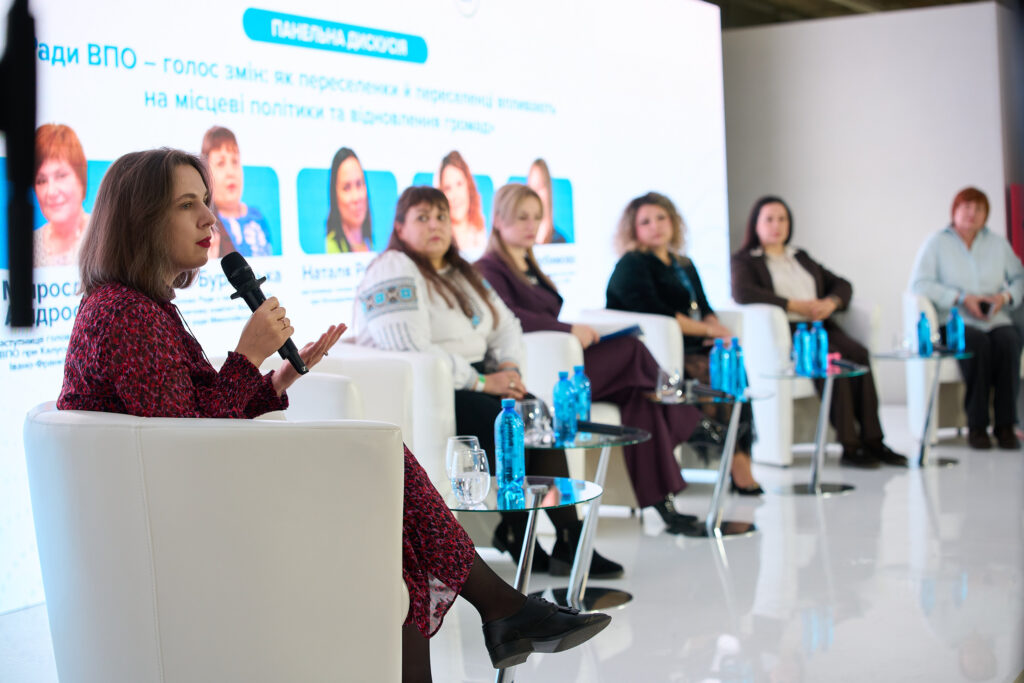
The panel discussions focused on the role of the IDP Councils in creating decent living conditions for displaced persons, their participation in community reconstruction, and strengthening their influence at the local level.
Practical Focus and New Partnerships
The forum became not only a platform for discussion but also a practical venue for learning, networking, and exchanging experiences. Participants worked in groups, developed budget requests, learned effective communication skills, and discussed models of sustainability and opportunities for financing local initiatives.
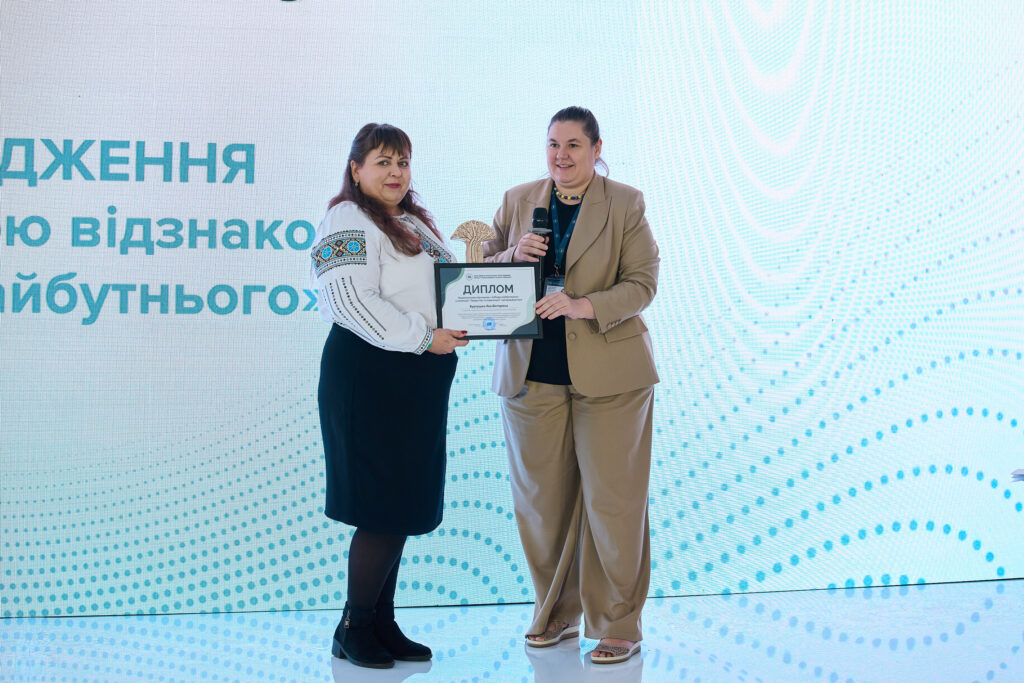
During the forum, the national award “For the Future” was presented for the first time — an award for the most active members of the IDP Councils in three categories: “Leadership and Advocacy,” “Innovation and Initiatives,” and “The Power of Cooperation.”

Another event was the “Alley of Opportunities. IDP Business Fair,” where relocated entrepreneurs presented their products, shared stories of recovery, and showed how business can become part of rebuilding new communities. Given that more than 8,000 businesses were relocated in Ukraine in the first eight months of 2025 alone, the fair became tangible proof of their ability to quickly adapt, expand production, enter new markets, and form partnerships in communities. For many participants, this was the point where they first saw themselves not as a relocated business, but as a business that is already developing with confidence.
The organizers will use the forum’s results to put together a set of recommendations for national and local authorities, based on the Councils’ regional experience. These recommendations should serve as the foundation for further integrating IDP Councils into national policy and enhancing their role in local democracy.
For reference:
IDP Councils are advisory bodies affiliated with local authorities, whose activities are governed by Resolution No. 812 of the Cabinet of Ministers of Ukraine, dated August 2, 2023. They ensure the participation of IDPs in local self-government, assist in resolving social issues, and promote integration into communities.
The Forum was organized by the Charity Foundation “Stabilization Support Services” in partnership with the Ministry for Development of Communities and Territories of Ukraine, with the support of UNHCR, the UN Refugee Agency in Ukraine, and the International Research and Exchanges Board (IREX in Ukraine).
The content of this publication is the sole responsibility of the CF “Stabilization Support Services” and does not necessarily reflect the views of UNHCR, the United Nations Refugee Agency in Ukraine, and the International Research and Exchanges Board (IREX in Ukraine).