In Lviv, experts of the United Voices in Action initiative, implemented by the international organization IREX in partnership with the Charity Foundation Stabilization Support Services and backed by the U.S. Department of State, showcased a large-scale study scrutinizing local policies and programs. This study casts light on how IDPs’ rights are respected and their integration into the life of their new communities.
The legal experts involved meticulously examined 193 local regulations from 25 communities across 15 oblasts in Ukraine. The experts paid particular attention to Lvivska and Chervonohradska communities. It has been found that IDPs are restricted in their right to participate in local decision-making and are not entitled to certain social benefits. This is due to gaps in the community statute, regulations, and local targeted programs that define the concept of a “registered place of residence.” This was stated by Oksana Yakovets, regional coordinator of the United Voices in Action program in Lvivska Oblast.
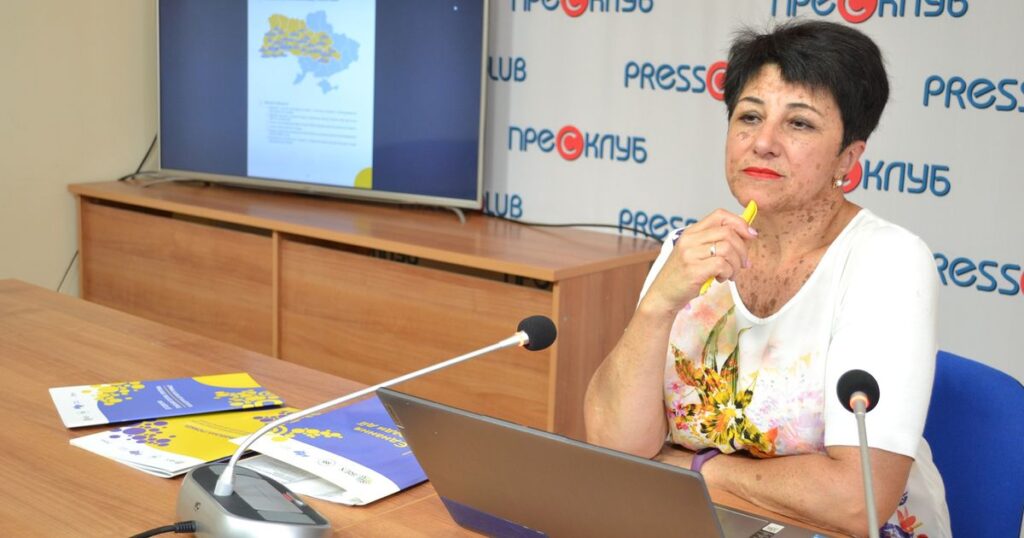
“Most statutes do not provide for IDPs to belong to the territorial communities where they actually reside. That is, IDPs cannot participate in general meetings, public hearings, vote on participatory budget projects, or use other tools of local democracy. They are also not covered by local targeted programs aimed at supporting community members. The result is certain discrimination,” Oksana Yakovets said.
The coordinator also mentioned that the local program for socially vulnerable categories does not take into account the interests of IDPs.
“For example, the regulation on one-time financial assistance for residents of the Lviv city territorial community provides for payments to people with disabilities, large families, single mothers, and other categories registered in the community. However, IDPs can also belong to a vulnerable category, but they cannot provide an IDP certificate and receive the same benefits,” explained the program representative.
However, Oksana Yakovets also shared some successful practices. These should be taken into account when developing local regulations aimed at socially vulnerable categories, including IDPs.
For example, the program to promote entrepreneurship in the Lviv city territorial community for 2023-2025 includes support for IDPs. In the Chervonohradska community, internally displaced children receive free meals in kindergartens
IDPs are involved in community life through their work in local authorities. In Lviv, IDPs from Skadovsk, Mariupol, and Kharkiv work in the city council, the ASC, educational institutions, and the IDP Support Center. In Chervonohrad, IDPs work at the humanitarian hub and at the Department of Labor and Social Protection.
However, such employment does not mean that IDPs are directly involved in local decision-making, as this would require amendments to be introduced into the community’s statute
The researchers developed recommendations for local authorities to improve their policies and programs. These include increased consideration of the interests and rights of IDPs. Specifically, to make appropriate amendments to the community statute, local targeted programs, and regulations that define the procedure for providing benefits and assistance to certain categories of the population.
Beyond Lvivska Oblast, these findings will be presented in the 14 other studied oblasts. The United Voices in Action program will send a summary of the recommendations to the Ministry of Reintegration of Temporarily Occupied Territories and other relevant national and local authorities.