Since the beginning of Russia’s full-scale invasion of Ukraine, Kropyvnytskyi has seen a surge in its population of internally displaced persons, now numbering 26,000. During the same period, the oblast has welcomed over 80,000 IDPs. Some remain for an extended period, some return to their original homes when possible, while others have no other place to go. Consequently, one of the most urgent issues faced by IDPs, much like in other oblasts, is securing accommodation. The steps being taken to address this and the role of the prospective IDP Council are discussed in an interview with Anton Antonov, regional coordinator of the United Voices in Action* program in the Kirovohradska Oblast.
How would you rate the housing situation for IDPs in Kropyvnytskyi and the oblast in general?
The actual capacity for housing IDPs in Kirovohradska Oblast stands at around 5,000 individuals. Nonetheless, our oblast has provided refuge to tens of thousands, and it’s not surprising that housing has become their foremost concern. The rental market is particularly challenging. Regrettably, there are landlords who demand excessive rents, putting housing out of reach for many IDPs. This is arguably the most significant concern for IDPs.
How do you believe IDPs can be assisted in resolving their accommodation issues?
It’s essential to address this issue head-on and start working on tangible solutions. In 2018-2019, there were discussions within the City Council about allocating land for construction, as IDPs have been part of our community since 2014. However, these ideas never progressed beyond the discussion stage. The problem has now become even more pressing. The establishment of the IDP Council in Kropyvnytskyi will offer comprehensive assistance for IDPs, involving them in discussions at the city council level and enabling them to contribute to decision-making. The authorities will work closely with IDPs to uphold their rights and facilitate their integration into the community.
Can you elaborate on the IDP Council? What’s its purpose and what issues will it tackle?
At the moment, the Department of Social Policy handles IDP matters in the oblast. However, this department also services other population groups, and with tens of thousands of IDPs in the oblast with immediate needs requiring rapid response, there’s a lack of a dedicated body to handle IDP issues exclusively. This is where the United Voices in Action program comes in, proposing to set up a specific advisory body in our city that can comprehensively address IDP matters. The envisioned IDP Council will be a communication platform for IDPs and local government representatives, which will not only foster dialogue but also tackle problems effectively. The IDP Council will outline its agenda based on the concerns raised by IDPs, and it will be equipped to give recommendations to the city council and prepare specific programs or propose solutions to key issues.
How do you see the composition of the IDP Council in Kropyvnytskyi?
We anticipate a sizable group – a minimum of 50 members. The Council will comprise IDPs and representatives from specialized NGOs. We’ve already formed a preliminary group of ten people who are guaranteed to be part of the Council. A number of these individuals have already undergone training as part of the United Voices in Action program.
What other support does United Voices in Action offer to IDPs?
Our program offers free legal consultation for IDPs. Our legal expert assists with matters such as registration, restoring lost documents, processing payments, and writing applications and appeals to authorities. To receive this legal assistance from United Voices in Action, individuals need to fill out a form detailing their contact information and the nature of their request. Following this, they will be contacted.
Our team also routinely visits the twelve designated Collective Centers for IDPs in Kropyvnytskyi to provide consultations, and there are plans to establish one more.
Furthermore, the United Voices in Action program conducts training for IDPs on a biweekly basis. Topics covered include understanding travel restrictions during martial law and procedures following the loss of documents. We are currently organizing a new workshop focusing on the Istanbul Convention.
What are the most common issues that IDPs bring to your legal expert?
Most inquiries relate to damaged properties or housing at temporary registration sites. Inheritance-related concerns, particularly the difficulty of formalizing or obtaining it, are also common. The hardest cases involve assisting individuals whose property is located in occupied territories. Our current procedure involves filing complaints at the closest police stations or relevant institutions within areas controlled by Ukraine, which establishes the groundwork for further action. Our lawyer reviews every case individually and provides as much assistance as possible.
What resources would you suggest for IDPs where they can access comprehensive information on a variety of topics?
United Voices in Action has created a guidebook encompassing 12 chapters, offering responses to the most frequent questions that IDPs might encounter: finding housing, IDP registration, education, employment, and humanitarian and social assistance. This resource is continually updated to align with changes in legislation or other relevant documents. Our guidebook is accessible in both print and digital forms. Copies have been supplied to the social departments of the City Council and the Oblast State Administration. All have acknowledged the depth of the guidebook, its frequent use by experts, and its widespread dissemination. We’ve also displayed our methodological resources on dedicated information stands in dormitories. They prove valuable not just for IDPs but also for those working with them.
Currently, there is considerable discussion about the integration of IDPs. Does the United Voices in Action program also engage in efforts in this area?
Our current focus is facilitating integration into communities, particularly for IDP children. We engage them in various activities. Regrettably, not all communities or NGOs give sufficient attention to integration. While there are trainings, webinars on diverse topics, Ukrainian language courses, etc., we are presently developing comprehensive strategies — identifying how, when, and who to work with to aid IDP children in adapting to new surroundings.
Kropyvnytskyi recently hosted a regional forum on the integration of IDPs. What were the outcomes?
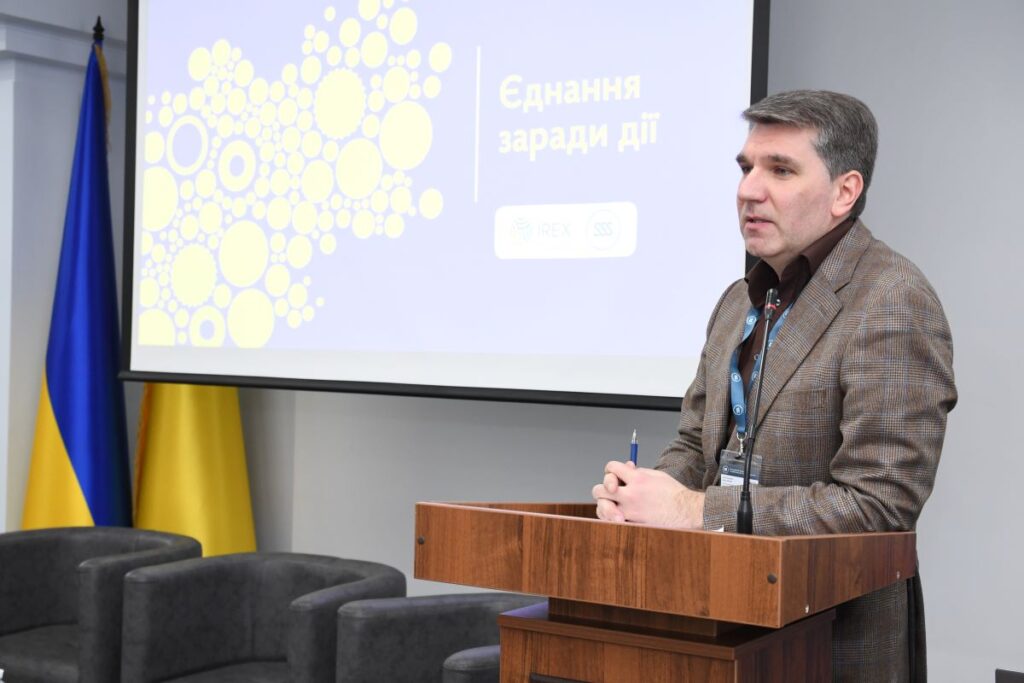
The primary objective of the forum was to promote the establishment of an IDP Council within the Kropyvnytska territorial community. Consequently, attendees endorsed a resolution in support of this initiative. It was a large-scale event that, perhaps for the first time in Kropyvnytskyi, brought together a significant number of people: IDPs, local government representatives, and numerous NGOs.
In addition to discussing pertinent issues related to the integration of IDPs into the community and plans for the upcoming year, the forum also served as a platform for sharing experiences. For instance, in social entrepreneurship and business relocation. Some participants were introduced to the operations of humanitarian hubs or children’s clubs. Therefore, the inaugural meeting in this format was informative and beneficial to all. One of our next steps is to set up an IDP Council within the Kropyvnytska territorial community to protect the rights and interests of IDPs.
Free legal aid and useful materials for IDPs are available on the United Voices in Action program’s website.
Source: Gre4ka